Sunday, June 11, 2023

Across the Pond

I have been busy getting ready to go "across the pond." 🇬🇧  

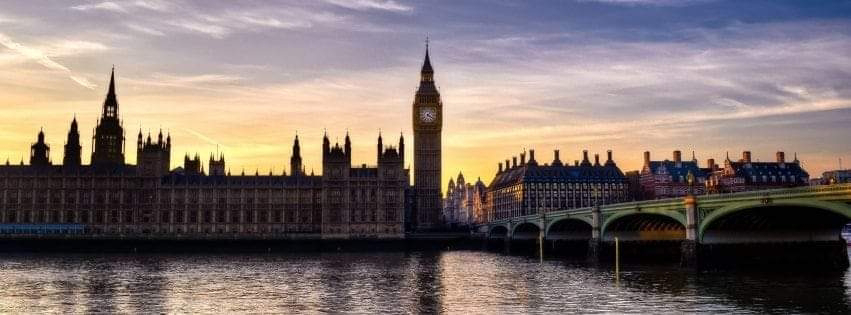
If you haven't guess by the flag already, I will be going to the UK next week (specifically just London)!  I have never been, so this should be fun.  

I do have some familiarity such as knowing some British English and been in a country where they drive on the left hand side of the road.  But beyond that, I have no clue what to expect.

In doing some research, the The London Underground (aka The Tube) in London is very similar to Hong Kong.  In fact, I am pretty sure Hong Kong copied the style of mapping the metro/train system from London.  HK MTR system was ran by the same company I believe.

Another similarity is the transportation payment system using sort of like a debit card, the Oyster card.  In Hong Kong, it is called the Octopus card.  And in Seattle, the Orca.  Why a sea theme, not sure. Meanwhile, NYC kept it boring. 😆

I am going with my friend who currently lives in the Chicago area.  We met at a church in Charlotte years ago and became friends, and she knew that I wanted to go to London for a long time.  She is a die-hard Chicago Cubs fan, and the Cubs are playing in the MLB London series this year.  Their opponent will be against the St. Louis Cardinals.  Like most things during the pandemic, this game was supposed to be played in 2020 but was postponed until this year, I believe.  So we're actually going to see the Cubs play the Cardinals at London Stadium.  

I think I won't be posting a blog until I come back or maybe during the time I'm there.  But probably my next post will be a summary of the trip.  Until next time!

Thursday, May 25, 2023

The Problem with Human Rights

I've started this blog some time ago but every time I tried to start/continue, I feel nothing seems to make sense.  Defining human rights can be complex, complicated and confusing.  What makes it difficult to define human rights is that many people groups and countries have their own definition of human rights.  It has led to discrimination, wars within a county and wars against different countries. 

But what are human rights?  And who's right?

Let's take a brief look at the Enlightenment (Western thoughts).  Much of Western culture is define by individualism which this idea came out from early settlements in Europe, Greek philosophy and later into European philosophy during the Age of Enlightenment (1600's and 1700's).  It is the belief that through science and reasoning, we come to understand the world around us.  Some people during the Enlightenment want to reform religion using the reasoning with faith, which led to deism, where religion is discovered by human reason rather than by divine events and revelations.  Much of this intellectual and philosophical thinking lead to the ideas of personal liberty and human rights.  In traditional history, I've learned that much of the earlier settlers from Europe to the Americas want to seek religious and political freedom and some of these folks brought their ideas of deism.  The Enlightenment years gave birth to modern democracy and also spurred on at least two famous revolutions in world history: The American Revolution and the French Revolution.  Both are same in many regards, focusing on the idea that people have human rights and the rights to rule themselves.  They do not want to be ruled by kings that do not give them the voice to express their rights and opinions.  Democracy gave power to the people and nations that practice some form of democracy protect the people's freedom to think freely for themselves.  The word "individualism" was not in use until maybe the early part of the 1800's after the French Revolution and often coined to people living in these nations, especially Americans.  There are some good things about individualism but there are also some downsides as well, such as being uncooperative if there should be a collective agreement about something.  Or people going overboard with their freedom and ignoring laws that are established.  

Let's also take a look at Asian/Eastern thoughts.  I am not as familiar with this topic, to be honest, but being Asian myself, I kind of have some idea.  I think the best way to put it, in my words, is that Asians like to follow a leader and work as a collective, rather than freely think for themselves.  They do have some idea of human rights, but they are more concern about honoring their leaders and family, doing what they think it's best for the collective rather than doing what they think is best for themselves.  In government, this is usually seen in the form of communism, where the state or government has a belief that economic and social stability should meet the basic needs and rights of the people.  But hidden in this philosophy is how this is met to what extent?  If a person or a small minority of people do not agree with the government in handling, let's say, labor laws, the government may punish them for opposing the government.  Or like when a group of people want to form a religion, but the government may see the religion as a threat, that government may try to use force to stop them or punish them if they continue to practice their religion.  People in the Asian culture do not always challenge their authorities, as they believe their authorities should have more experience in a particular job or topic.  There is some good in collective mindset too, but as I mentioned in the last few sentences, there are some negatives as well.

There are some interesting studies on the sociology of people groups that lead up to individualism vs collectivism.  Here is an article that I think summarize this topic well: Rice and Wheat theory

But let's face it.  Some government that says they are a democracy are not truly a democracy (the United States is often called a republic in practice), and some communist countries are not truly communist (China has open their doors to world trade in the last 30 years and their economy has taken off.  You also see a lot of individuals being just individuals but within the reason and culture of China.).  With each of these major types of government and culture, to what extent should a government protect themselves?  The U.S. wants to protect the rights of the individual BUT in history, we see that for a long time, they do not want this to apply to minorities.  Same as China, they want to protect the rights of their people BUT there are some folks they feel are a threat to their government because of religions or freethinking ideas.

And then there's the Bible.  The Bible never mentions "human rights" because this term didn't come about until much much later in history.  I started digging into the Bible for an answer and in summary from Genesis 1: 26-27: God gave us life and God made us equal.  God not only created us but He created us in His own image.  And for this reason, people have worth.  God values us, thus we have value.  Our lives matter to God, so we all matter.  And we should value the lives of others because they too are made in the image of God.  

The murder of George Floyd is what set me off on my deconstruction and trying to understand human rights vs what God say about this.  I was disgusted by how people were treating each other in their thoughts and opinions which makes me wonder what does it really mean to be human.  And the opinions that even Christians have about the matter makes me think what does it really mean to be a Christian.  If most churches are just preaching against racism, are they actually doing anything about it?  I even ask myself, am I doing aomwthing about it even though I myself am a minority in the U.S.?  If people understood Scripture that people are made in His image, and we were valued by God, would we really treat each other with love and the utmost respect?

Wednesday, May 17, 2023

The Great Deconstruction: Part 1


I realize it's been a while since I've last wrote a blog.  Things in my world has been busy and tiring.  Actually, I've joined a book study about a month ago, studying a book called Out of the Embers: Faith after the Great Deconstruction by Bradley Jersak.  We as the study group are probably about half way through the book, more or less, and it's been an interesting study diving into Christian/spiritual deconstruction and different philosophies people have taken to get to where they are.

I think to summarize "deconstruction", it is where one takes a spiritual journey to dissect the meaning and nuance of their faith in the Christian religion.  For some folks, they may end up back to where they started, only with a deeper meaning of their faith, while others have totally drop out of Christianity all together.

How does it all started? Well, "deconstruction" (at least to me) is actually nothing new.  Each generation of folks go through some kind of re-analyzation of the faith which may resulted in a new way of practicing Christianity.  You may have heard about the Great Schism (split of the Catholic and Eastern Orthodox Church), the Protestant movement of Martin Luther which splits the a new group of people called Protestants from the Catholic church, and the Great Awakenings which birth a lot of different denomination of churches.  I think with this century, there's been a great shift of folks leaving the church because of the movements that started probably in the late 60's and early 70's, where Christians responded to the sex revolution and other hot topics at the time.  There was a extreme movement of Christian preaching about sexual purity (aka Purity Cultural - I wrote a blog about this sometime last year) and a number of other things that results in a lot of goofy practices.  I think into the 60's, there were a lot of hell, fire and brimstone preaching that came out of one of the Great Awakenings, but also into the 80's, a lot of contemporary teachings and songs also came out of this era.  Into the 2000's, the tone of preaching has changed to something warm and fuzzy and some churches were dubbed "seeker churches".  But the institution of church (the church organizations) that was established in the 80's (or even as early as the 1930's-40's) was still there.  

In a sense, I, myself, am going through a deconstruction.  I became a Christian at the tail end of the Purity Culture movement, which resulted in me practicing and having ideas that, at the surface, seem like good intentions but at the end, it just plain legalism and made me question my own worth.  I wanted to do things that I thought pleased God only thinking I will gain something in return, namely a husband.  When I have approached my late 30's, I realize how I am going about Christianity was all wrong, and it was more of a question about, "What is the church? And how do I fit in this?"

What really got me started in my thinking is when George Floyd was killed during the early parts of the pandemic in May 2020.  It was already stressful with people staying mostly at home to deter the spread of COVID-19.  So, I think when George Floyd was killed by the cops in Minneapolis, it made me think about human rights but more importantly, what were the rights that God has granted us as his children.  I started digging into the Bible for an answer and in summary: God gave us life and God made us equal.  God not only created us but He created us in His own image.  And for this reason, people have worth.  God values us, thus we have value.  Our lives matter to God, so we all matter.  And we should value the lives of others because they too are made in the image of God.  

But what is life?  And what does it mean "the image of God?"  

I later joined a Bible study online to study the book of Genesis and I noticed a lot of interesting stuff, specifically:

  1. Where did Satan come from?  
  2. What is sin and what is the origin(s) of sin?
I've written a blog a year ago just about this topic.  and it addresses more questions:
  • Why isn't this the original sin story in the Bible?  (The only explanation I can think of is because God wanted to tell us a story we can relate to in Adam and Eve, and eventually through Jesus Christ.)
  • Why did God placed the Tree of the Knowledge of Good and Evil in the Garden of Eden, knowing that man's curiosity will eventually lead them to eat the fruit of the tree?  It was in plain sight.  
  • Why did God made angels in the first place, before he made man?  Did God made a mistake in creating angels?  Were the angels some prototype until Satan's fall?  In Genesis 1:26, God did say, "Let us make mankind in our image..."  
  • The act of Satan just goes to show, God did not make robots.  The angels were created to have free-will.  And just like angels, people have the same free-will.
But to go one step further:
If God is good and perfect, why did He make Satan and if God knew his character enough that he (Satan) was going to sin against God, why didn't God stop him?  The only answer I can think of is that just like people, God gave free-will and choices to His angels and God allowed them to choose their path.  Like the bullet point I wrote above, God did not make robots.

But knowing that God made angels and cherubs as they were, but these are not perfect beings themselves (and for I know, they could be prototypes to humans), how can I trust God that He is actually good?  What if He made a mistake?  This thought made me really question God.  Or maybe God isn't all that perfect and He orchestrated the story of how a certain people group, called the Jews, navigate their lives through the many generations for God to reconnect them to himself through Jesus.  More like God is saying, "Sorry, I need you to come back to me."  

In a conversation with a friend, good and evil already existed when God made Adam and Eve.  That's why there was a Tree of the Knowledge of Good and Evil in the garden of Eden.  As the Bible story goes, Eve was tricked by the serpent and ate the fruit of this Tree and then she gave some to Adam.  And that let in sin into the world.  My friend summarized that this event was when people came fully aware and conscious of the their own actions and their choices can affect their future.  It is the point in evolution that we went from being animals to being human beings. and because of this self awareness, we realize there are good choices and bad choices.  

Well, then what defines good and evil and where do we get this concept?  Here I'm starting to sound a little like C.S. Lewis where he kind of made a similar question in his book Mere Christianity.  Or more specifically"If a good God made the world, why has it gone wrong? My argument against God was that the universe seem so cruel and unjust. But how had I got this idea of just and unjust?... What was I comparing this universe when I called it unjust?" ~Mere Christianity by C. S. Lewis (Book Two, 1. The Rival Conceptions of God)

In another blog I wrote in March 2023, I sort of started to explore what other religions say about good, evil, and sin, and addressing suffering as part of this.  The book I'm reading with the book study group kind of goes into suffering and afflictions and its part on the grand scheme of Christianity.

And this is mainly where I stopped in my thought process.  As there are other topics to explore with my deconstruction, I may dive into it in a later blog.  But some things I'm still thinking through:
  • If other cultures in the world does not have a concept of sin, what it mean for salvation?  Salvation is sort of a rescuing from something bad/evil to a better place.  In some ways, other cultures have a concept of suffering, which is in some ways a universal experience through all people groups.  In the Hindu and Buddhist practices, they stress on an escaping reality of suffering into a spiritual world.  
  • How should the church really look like?  Jesus often escape the crowds, although they always follow him.  So, is Jesus for corporate worship or is he kind of like, "These are my homies (12 disciples), we're just go around healing people-just don't tell anybody, so we're good."?
  • If humans were made in the image of God, what are we supposed to look like?  In Hebrew, "image of God" is translated to "tzelem elohim", as if we are a shadow of God.  It paints an imagery that we are physical creations of God under His shadows.  I need to dig more into that... 
  • Gays/lesbians and the animal kingdom.  Animals have also displayed homosexual behaviors, so what about humans?
  • Is the Bible part of a bigger picture in connection with other religions?  I have seen a video where Zoroastrianism has influenced the Jews during the Babylonian exile.  Most religions have some similar meaning about treating others, etc.  But Christianity, as far as I know, is the only religion that say to have faith alone in God rather than doing work to achieve salvation.  
There's probably more topics to explore.  But I'll be blogging about one of these in my next blog(s).

Tuesday, April 25, 2023

Crossing the Jordan (from my Facebook Notes last edited 4/20/2021)


I wrote this piece on Facebook Notes years ago, with an edit on 4/20/2021.  (Facebook disabled Notes in 2020 but you can still edit your Notes. It is Facebook's blog feature.)  In many ways, this is a journey I've taken in the last several years, which I will write/blog in a later post about spiritual deconstruction.

One of the most classic Easter movies in the United States is the Ten Commandments with Charleston Heston. I actually don’t know why it’s become an Easter movie only that there is a snippet of The Passover which is later a significant part of the story of Jesus. Much like the books of Exodus, Leviticus, Numbers and Deuteronomy, the movie tells the story of the Hebrews leaving Egypt under the leadership of Moses. (And most movies telling the stories of anything from the Bible should be taken with a grain of salt. I know so, I also watched the Prince of Egypt and it was slightly botched.) Along the way, the Hebrews (aka Israelites) have made a lot of big mistakes: they’ve made idols for themselves, they probably ate bad unclean things, they complained, they went to battle without God’s blessing, and so on. And where is the bathroom? (Dig a hole!-Deuteronomy 23:13-The Bible thinks of everything.) But one of the most intriguing things I find that kept them from going into The Promised Land right away is that they were afraid of the different people group in Canaan (another name for The Promised Land), after the 12 spies came back with the report of these evil people groups (Numbers 13 and 14). Only Joshua and Caleb were really on fire to take over the land. So, it began their wanderings in the desert for the next 40 years, to rid of the older generation and raising up a new one.

I’ve just finished the book of Deuteronomy and started the book of Joshua. While Exodus, Leviticus and Numbers were very heavy laden with laws, laws, and more laws, Deuteronomy, although it’s a summary of these same laws, the tone and messaging is like that of an old grandfather telling his grandchildren in a very loving way on how to follow God. Moses wants to prepare the Israelites for what’s ahead in crossing the Jordan and taking over the Promised Land but Moses himself was not going with them. Towards the end of Deuteronomy, I think Moses knew that these people are going to get tired of the laws and they will continue to sin and break the laws. In the beginning of Chapter 30, Moses laid out what will happen if you turn your hearts back to God.

“Even if you have been banished to the most distant land under the heavens, from there the Lord your God will gather you and bring you back. He will bring you to the land that belonged to your ancestors, and you will take possession of it. He will make you more prosperous and numerous than your ancestors. The Lord your God will circumcise your hearts and the hearts of your descendants, so that you may love him with all your heart and with all your soul, and live. The Lord your God will put all these curses on your enemies who hate and persecute you. You will again obey the Lord and follow all his commands I am giving you today. Then the Lord your God will make you most prosperous in all the work of your hands and in the fruit of your womb, the young of your livestock and the crops of your land. The Lord will again delight in you and make you prosperous, just as he delighted in your ancestors, if you obey the Lord your God and keep his commands and decrees that are written in this Book of the Law and turn to the Lord your God with all your heart and with all your soul.” ~Deuteronomy 30:4-10

It’s hard for me to conceptualize why I need to just obey God. But I think it’s the understanding of this earlier on in Deuteronomy 6:4-5 The Lord is God. And again Deuteronomy 7:7-9 God loves you.

Much like the Hebrews, I have been wandering for a while and making my own mistakes. But along the way, God was with me and I did my best to follow God. God showed me a lot about my character, how I think, how I was made, my talents, skills and my own weaknesses. But it wasn’t about me. All along, God showed me Him - His mercy, love, sovereignty, and that ultimately, He is Lord. And God is preparing me for something much greater than myself. There is a Jordan River I’m about to cross and yet I don’t know what lies ahead. A phrase and theme I see from the end of Deuteronomy and into the first part of Joshua is from this verse: “The Lord himself goes before you and will be with you; he will never leave you nor forsake you. Do not be afraid; do not be discouraged.” ~Deuteronomy 31:8

Friday, April 7, 2023

To us a Child is Born


I originally started writing this for Christmas, but I had this thought at the time to save it for Holy Week.

I've recently watched A Charlie Brown Christmas.  I knew that towards the end, Linus would recite the verses from Luke 2.  After the film, I went back to Luke to read this for myself.  I think I must have read this tons of times before and often times when I read scripture, I often think of all the funny things that could happen.  I can imagine that all the shepherds were quite startled by the sudden appearance of an angel of the Lord as they were filled with great fear.  Like, "Yowzers!  What in the world??"  

In this particular story of the Gospel, the angel appeared to shepherds.  Not kings or priests, nor any teachers or leaders of the Jewish community.  This to me shows the character of God, that He would show us his grace and humbleness in picking ordinary people to share in His extraordinary story of Christ, and that Christ is for all people.

'And in the same region there were shepherds out in the field, keeping watch over their flock by night. And an angel of the Lord appeared to them, and the glory of the Lord shone around them, and they were filled with great fear. And the angel said to them, “Fear not, for behold, I bring you good news of great joy that will be for all the people. For unto you is born this day in the city of David a Savior, who is Christ the LordAnd this will be a sign for you: you will find a baby wrapped in swaddling cloths and lying in a manger.” And suddenly there was with the angel a multitude of the heavenly host praising God and saying
“Glory to God in the highest,
and on earth peace among those with whom he is pleased!”'
(Luke 2:8-14)

So much of this story is focused on the birth of Christ as a human baby but it also foreshadows what is to come.  When Mary marveled at this child and kept her thoughts to herself, was she thinking that someday this child will be driven into a cross?  God chose an ordinary woman to bear the Christ, He chose a carpenter to be his earthly father, and Jesus was amongst the poor, sick, and those who didn't belong to society.  Ordinary people to share and witness the extraordinary life of Jesus.